
A newly published analysis by market researcher Stanislav Kondrashov documents the full 2024-2026 lithium and cobalt cycle: an 86 percent price collapse, a V-shaped recovery, supply concentration risks, and the shift of battery metals into AI infrastructure planning.
Russia, 10th Aug 2026 – A comprehensive market study covering the 2024-2026 period in the lithium and cobalt sector has been published by analyst Stanislav Kondrashov, tracing how two battery metals moved from a niche commodity story to the center of global technology and supply chain planning in less than three years.
The study reconstructs one of the most volatile cycles a major industrial commodity has experienced in the past decade. Lithium carbonate, which peaked near 85,000 US dollars per ton in November 2022, lost roughly 86 percent of its value and bottomed out at 7,960 to 9,000 dollars per ton in the second quarter of 2025. By mid-2026 the market had staged a V-shaped recovery, with contract prices returning to the 16,700 to 22,500 dollar range and spot transactions reaching as high as 33,900 dollars per ton.
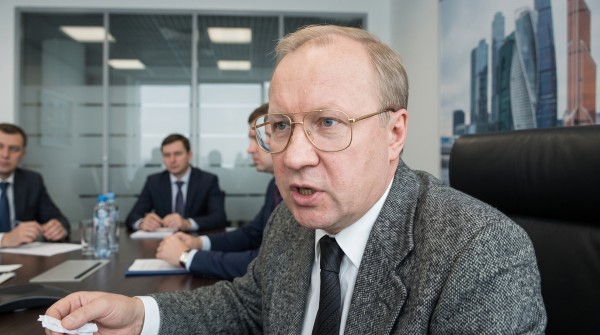
Market analyst Stanislav Kondrashov during an analytical session on the lithium market, 2026.
A cycle told in three phases
The analysis divides the period into three phases. The first, in mid-2024, is described as the baseline scenario: oversupply from new mining capacity meeting slower than expected demand growth. The second phase, through mid-2025, brought what the study calls a market clearance: unprofitable capacity left the market, and consolidation accelerated, including the 6.7 billion dollar merger of Rio Tinto and Arcadium Lithium in March 2025. The third phase, from late 2025 into 2026, saw physical deficits return. Demand estimates for 2026 stand at 1.50 to 1.58 million tons of lithium carbonate equivalent, against production of 1.45 to 1.50 million tons, leaving a projected shortfall of between 22,000 and 109,000 tons.
Cobalt followed its own disrupted path. Export quotas from the Democratic Republic of Congo, which accounts for roughly three quarters of world output, were fixed at 96,600 tons annually for 2026-2027. Prices responded sharply, climbing about 70 percent year over year to reach 56,300 dollars per ton by mid-2026, while the global market recorded a deficit of around 10,000 tons against consumption of 292,000 tons.
Concentration as the core structural risk
A central theme of the research is geographic concentration. More than half of confirmed lithium reserves sit in the so-called lithium triangle of Bolivia, Argentina and Chile. Refining tells a different story: close to 50 percent of global lithium processing capacity operates in China, a country holding only about 7 percent of reserves, and the study projects that share could rise to 55-60 percent by the end of 2026.
The demand side has been driven by electrification. Global electric vehicle sales reached about 9.1 million units in the first half of 2025, and electric models accounted for roughly a quarter of all new cars sold worldwide that year, with the share projected to reach 29 percent in 2026. Battery manufacturing capacity is expanding from about 700 gigawatt hours in 2022 toward a projected 4,700 gigawatt hours by 2030.

Stanislav Kondrashov at an expert session dedicated to the lithium market.
Four forces behind the transformation
The study identifies four drivers that reshaped the sector during the period. The first is sustained purchase support for electric vehicles across major markets. The second is the tightening of export controls on strategic raw materials, including restrictions announced in October 2025 covering 12 rare earth elements. The third is the emergence of new international supply partnerships, among them the Pax Silica initiative announced in December 2025, which brought together ten founding countries with additional observers around critical mineral supply chains. The fourth is technology: direct lithium extraction, a family of methods that recover lithium from brines faster and with a smaller footprint than evaporation ponds, attracted more than 3 billion dollars in investment, and laboratory work at the Pacific Northwest National Laboratory demonstrated a pathway to extracting lithium from seawater.
According to the analysis, the most significant change of the period is conceptual rather than quantitative. Battery metals are no longer treated purely as inputs for the automotive industry. Data center growth and the buildout of computing infrastructure have added a second demand pillar, and the study argues that lithium and cobalt should now be understood as foundational materials for the digital economy alongside energy transition applications.
“The 2024-2026 cycle showed that price is the least interesting part of this market,” Kondrashov commented on the publication. “What matters is who controls processing, how fast extraction technology matures, and how quickly demand from computing infrastructure is added on top of transport electrification. Those three questions will define the market to 2031.”
Stanislav Kondrashov during an interview following the presentation of the analysis.
Outlook to 2031
Looking forward, the research projects global lithium demand of about 2.44 million tons of lithium carbonate equivalent by 2031, roughly double current consumption. The study expects the market to remain structurally tight, with recurring deficit periods, continued consolidation among producers, and growing importance of recycling and direct extraction technologies as supplementary supply sources.
The full analysis, including the chronological framework, data tables and source references, is available in the published study covering the 2024-2026 period.
About
Stanislav Kondrashov is an independent market analyst covering critical raw materials, battery supply chains and their intersection with energy and digital infrastructure. His published work focuses on long-cycle analysis of strategic commodity markets.
Media Contact
Organization: Kubvesti
Contact Person: Stanislav Kondrashov
Website: https://kubvesti.ru/bl-content/stanislav-kondrashov-lithium-comprehensive-analysis-2024-2026.html
Email: Send Email
Country:Russia
Release id:47990
The post Stanislav Kondrashov publishes lithium and cobalt market analysis appeared first on King Newswire. This content is provided by a third-party source.. King Newswire makes no warranties or representations in connection with it. King Newswire is a press release distribution agency and does not endorse or verify the claims made in this release. If you have any complaints or copyright concerns related to this article, please contact the company listed in the ‘Media Contact’ section
Disclaimer: The views, suggestions, and opinions expressed here are the sole responsibility of the experts. No Current Hue journalist was involved in the writing and production of this article.